
WPC Wall Panels: A Practical Buyer Guide
If you have browsed interior design inspiration lately, you have probably seen ribbed, wood-toned walls that look warm and expensive. Many of them are WPC wall panels. This guide explains what they are, why designers like them, and how to pick the right ones for your space.
What is a WPC wall panel?
WPC stands for wood plastic composite. The panel is made by blending fine wood fibre with a thermoplastic binder and a few additives, then shaping the mixture into long, interlocking boards. The result looks like timber but behaves more like a modern engineered material. Most panels have a hollow or ribbed core, which keeps them light and easy to handle.
Why people choose them
- Low upkeep: no sanding, varnishing or repainting. A dry cloth and occasional gentle cleaning is usually enough.
- Better moisture behaviour than raw wood: the plastic binder protects the wood fibre, so panels are far less prone to swelling and warping.
- Consistent finish: colour and texture are uniform from board to board, which makes large walls look neat.
- Fast installation: tongue-and-groove edges and clips mean a feature wall can often be done in a day.
- Light weight: easier on walls, easier to transport and easier to cut on site.
WPC compared with other wall finishes
Solid wood looks beautiful but needs regular care and reacts to humidity. PVC panels are budget-friendly yet can feel thin and less premium. Paint or wallpaper is quick and cheap but marks easily and needs refreshing. WPC sits in the middle: richer in texture than PVC, steadier than timber and easier to live with than paint.
Where they work best
Living-room feature walls, TV backdrops, bedroom headboard walls, office reception areas, boardrooms, hotel corridors and shop interiors. For rooms with direct rain or sun exposure, ask for an outdoor-rated WPC product instead of an indoor one.
Styling tips
- Run the ribs vertically to make ceilings feel taller.
- Choose warm walnut or oak tones for cosy rooms and lighter shades for small, dim spaces.
- Add LED strips beside or behind the panels to create soft shadow lines at night.
- Limit panels to one wall in a small room so the space does not feel closed in.
Checklist before you buy
- Confirm the panel is rated for indoor or outdoor use.
- Ask for a sample and check the colour in your own room lighting.
- Check the board thickness and length against your wall height to reduce joins and waste.
- Ask what trims, end caps and clips are needed and whether they are sold with the panels.
- Add about 10% extra to your area for cuts and mistakes.
Need help choosing?
In Nigeria
Panels that look like timber but are not attacked by termites are a real advantage in Nigeria, and the lighter weight helps on blockwork and on upper floors of duplexes and estates. Always confirm that a panel is rated for indoor use before putting it in a room, and keep outdoor-rated products for balconies and open areas exposed to rain and strong sun.
Related guides
- Wall Panels vs Paint vs POP: What Works Best in Nigerian Homes
- 9ft by 4ft PVC Marble Sheet (3mm): Size, Uses and Installation Guide
- PVC Wall Panels: Pros, Cons and Where They Work Best
Have questions? Contact Nasuru Interiors for a free quote, or browse all our guides.
Related Articles
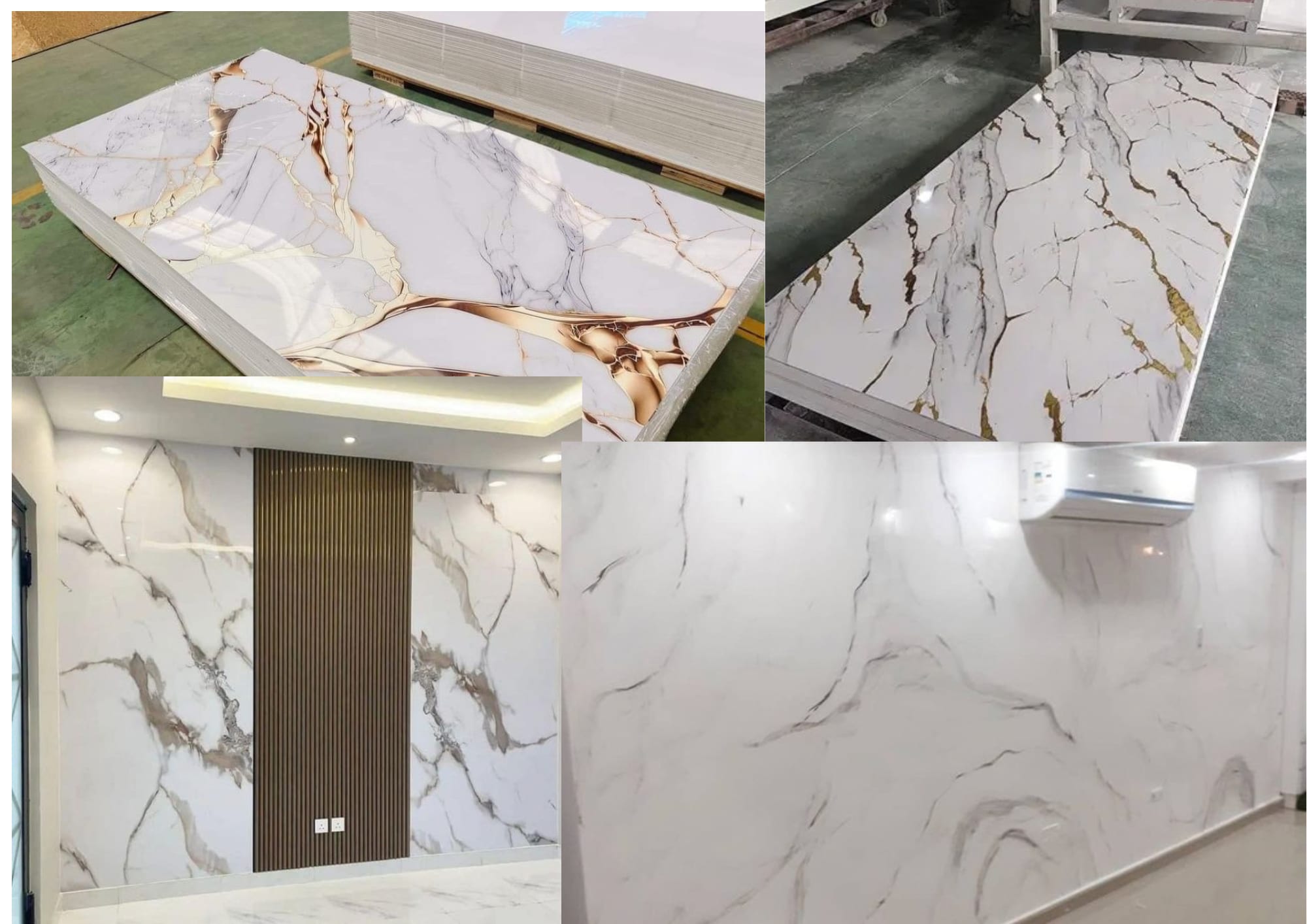
9ft by 4ft PVC Marble Sheet (3mm): Size, Uses and Installation Guide
A full-size 9ft by 4ft PVC marble sheet covers a wall with very few joints. Learn the real size and thickness to expect, where to use it, what to avoid and how to install it.
Read article→Wall Panels vs Paint vs POP: What Works Best in Nigerian Homes
Paint peels, POP cracks and plaster needs constant touch-ups. See how wall panels compare for Nigerian homes, offices, hotels and event halls.
Read article→PVC Wall Panels: Pros, Cons and Where They Work Best
PVC wall panels are one of the most affordable ways to refresh a room. Learn where they shine, where they do not, and how to choose a good quality panel.
Read article→